
Santiago
Updated: May 10
After a windy and cold night at the coast, it was somewhat of a shock to arrive in the blistering heat of Chile’s capital. We headed straight to a vet who told us that it was 15k per cat for the health certificates we would need for the border. What they didn’t mention was that they also charged 15k for the consultation, which basically involved weighing them and not a lot else. This, on top of the parasite treatment for our two girls, set us back the best part of £100 and I was pretty pissed off with the vet for what was basically a lie. Why tell us the price was one thing when they wouldn’t issue it without charging double? Still, we paid and headed to the government office located nearby at the airport.
We parked up in a small parking lot in the full force of the afternoon sun. I hoped we wouldn’t be long as we couldn’t leave the cats trapped in the camper like this for too much time. Luckily, it was a lot cheaper and also fairly quick. We paid the fees, left the health certificates with SENASA and got told that we could collect them on Monday. Time to head off and enjoy the weekend in the city.
Santiago doesn’t really have any established campgrounds and it seemed like the popular option with travellers was to camp on the street next to the city's main park. After nearly boiling our engine in the final tunnel to reach this destination, we pulled over at the side of the road. It was a quiet street, with security cars passing frequently. We had the grass park to one side of us, with the tallest building in South America dominating the skyline behind. Despite the fact that we had only just arrived and were back on the road, we let out the cats. Temperatures inside the camper were coming close to 40 degrees and we all needed a breeze and some shade.
We thought we’d enjoy a nice cold beer too, but it wasn’t long before we were made to throw them out by the local police. I retrieved my can from the bin once they’d left (it was a clean empty bin, I’d like to add) and put it in a cup. We sat outside until it had cooled enough to contemplate cooking before heading in and enjoying a surprisingly peaceful night.
The next day was an exciting one. For the first time since Colombia, we could go shopping at Decathlon. I currently owned one pair of broken shoes and Lee wasn’t much better off. Buying shoes and clothes can be hard for us, especially in countries like Peru and Bolivia where we are far bigger than the natives. I have pretty average-sized feet for a European, but here I’d be looking for the biggest sizes available. Part of the reason for us coming to Santiago was to stock up on shoes and also some new camping chairs. The one I’d bought only a week ago had already broken and it seemed worth the trip to get some better quality, but still affordable, gear.
Lee’s mum had kindly sent us some spending money and so we walked down to the local branch, located in the shopping mall at the base of the skyscraper. After a large and successful shop, I finally had trainers once again. On Sunday, we took down our bikes and headed to the nearest large pet shop. We had decided the time had come to upgrade the cat litter tray and also buy them some name tags for their collars. We used to buy Aimee cute little engraved tags a lot at the beginning, but when she lost her collar on a regular basis we stopped, as it got pretty expensive. Now, as she was mellowing down a bit several years on, we decided to try again.
Santiago is a bike-friendly city and on Sundays large stretches of the main road are shut down to cars. Even on weekdays the city has a network of bicycle lanes and, being relatively flat as well, it was a convenient way to get around. We didn’t want to take the cats with us in such hot weather, so we left them sleeping in the bushes by Ruby while we headed off to Sodimac. I had some plans of getting us a water pump for Ruby, but after some costings and deliberation we decided that, as nice as it would be, we didn’t really have the space for it. Perhaps another time.
That afternoon, I sat on the street with the cats and a bunch of our stuff while Lee headed off to get the papers from the airport. He returned a little while later with the papers, but hadn’t bothered to check them. A quick inspection revealed that we wanted to take our two ‘caninos’ across the border. At least on the other page they’d put cat, and we hoped no one would care.
Now that we had all our documents, we could cross when we wanted, but we decided we’d stay one more day in order to visit the park. This huge space has a cable car which you can take from close to where we were parked up to one of two stations. The next day we set off to explore. We decided to buy a ticket to the furthest station, where a giant statue of the Virgin Mary looks out over the city. From there, we could walk back down to the van. The cable car is a relatively cheap affair and it didn’t take us long to buy our tickets and board. As we swung up over the tops of the trees, we got our first view of the city. We had debated whether we would pay to go up to the top of the Costanera skyscraper, but it was a bit expensive. Now I was glad we hadn’t bothered, as the city was nestled in smog and we would have paid a lot for no more of a view than we were currently getting from the cable car.
We passed the first station and continued upwards, disembarking right at the top. On the way out of the station, we couldn’t resist grabbing an ice cream and sitting with it in the midday sun to enjoy the view.
We walked around to the front of the viewpoint where we climbed up the stairs to the statue. It was a fantastic view of the city.
Now we escaped from the crowds as we took one of the many walking routes back through the park. We slowly descended down, the cable car crossing backwards and forwards above our heads as we reached the base station. Instead of returning to the van, we passed it and headed back up towards the Japanese garden. In a park this size, there were several smaller gardens within the park as a whole. The Japanese one was particularly pretty.
After a pleasant few hours hiking around, we returned to check on our melted cats. The next day we decided we’d leave for the border. While we had planned to go early and try to avoid some of the heat, we didn’t really manage it. We climbed the hills out of the city itself in the morning, but Ruby still struggled. We pulled over multiple times to let the engine cool and this in turn took time. A two-hour drive turned into a five-hour one. Our engine struggled to cool on the main border road as it wound through endless small towns. This meant a lot of speed bumps. Being the border road, it also meant a lot of lorries. We found ourselves stuck in a string of lorries crawling slowly upwards and the lack of airflow and afternoon temperatures was too much for the engine. Slowly, we crept higher and the cooler air temperature allowed us to drive a little longer between stops. We had reached the point where now the roadworks slowed us. Large sections of the road were being maintained and the traffic stopped for a good 45 minutes every time. Eventually, we reached the caracoles, an impressive section of road which is the final ascent to the border.


The air was now cool and the roadworks gone. Nevertheless, we stopped one more time to give the engine a break before tackling the final tunnel, the midway point of which was the actual border. After a very long and somewhat stressful drive, we were happy to emerge on the other side into country number 14. From here, it was all downhill. We stopped at a small booth in the road where we were given a stamped ticket. The police officer instructed us to keep driving down towards immigration. Now an easy drive, we sat back and enjoyed the views.
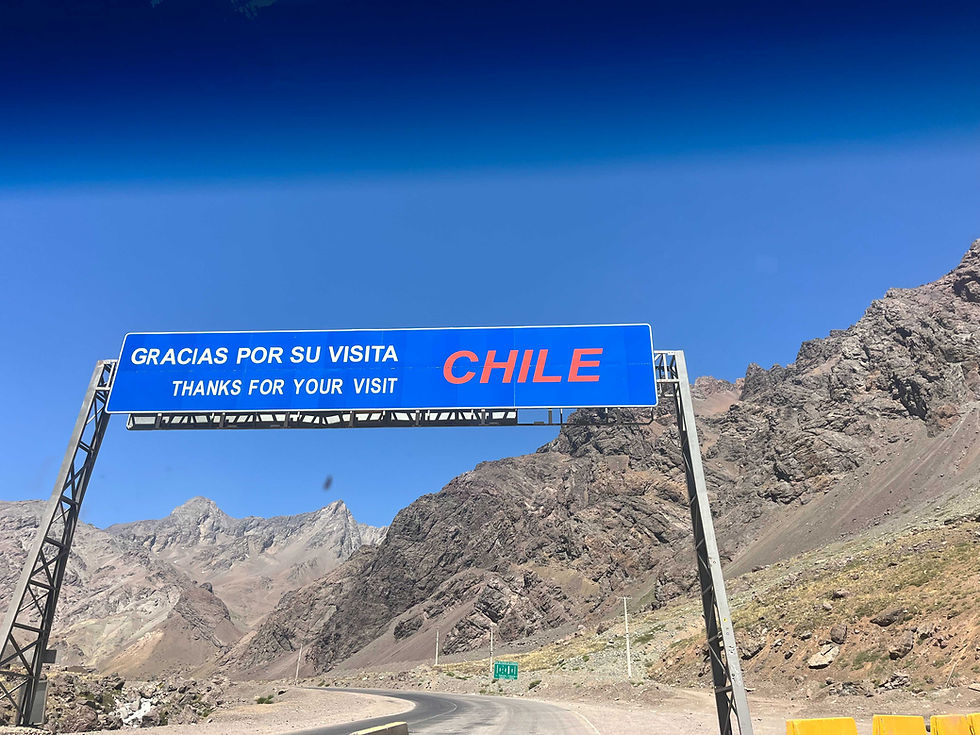
The immigration at this border point is a drive-through one. We pulled up at the large building and were waved into line. Even though it wasn’t necessary to get out of the car, I had to take our passports to immigration. In Argentina, you don’t receive a stamp and the whole process went quickly. Multiple border officials descended on the van, checking this document and that. They then told us we were good to go. We had to insist that they provided us with a TIP document for the vehicle. Rather grudgingly, this was supplied after a short wait. All in all, it had taken about 20 minutes to officially enter and we cruised out of immigration and continued on.
Throughout the process of entering the country, you have to get the small piece of paper that you were given at the first booth stamped. This shows you’ve completed the necessary parts of the process. Then, once you leave immigration, you have to hand this in to a different police officer another 15km down the valley. While the immigration process itself had been remarkably quick, the queue to hand in the tiny piece of paper took over twice as long. Finally, we left this last checkpoint behind us and we were officially in the country. That peaceful ‘new visa’ feeling washed over me. Three months ahead of us. We headed for a nice-looking river parking spot just before the town of Uspallata to spend our first night.


Comments