
Repairs in Arequipa
With Ruby booked into the garage the next day, we didn’t want to head far out of the city. We opted to stay for free on the side of Selva Alegre Park. From here, we walked back to Nowhere Brewing company and had a couple of drinks and some food, as neither of us felt like cooking that evening.
Back at the van, we walked the girls around the park before heading to bed for the night.
The following morning, we headed off to the garage we had been speaking to. We met the owner out on the street and he showed us inside. It was a decent space, full of Kombis. They did everything from mechanical work to painting. The only problem was, they were pretty busy. As we didn’t have very long left on our visa, he drove us over to a friend of his who also works on Kombis. He said that here we could get things done quicker.

This garage was called Lopez Customs, and was run by a guy called Omar. He did the usual shunting of cars, and soon had us in a spot. Despite being parked on level concrete, Ruby sagged to one side. I said I thought the torsion bars were broken, and we agreed the only thing to do was strip the front beam and see what was going on. The other guy said he had another set of bars.
It didn’t take long to strip down the front beam and reveal that the bars were not broken. This was a bit of a downer, as it meant there was no clear reason what was wrong. We decided we’d try the second set anyway, as maybe ours were worn or weakened. There wasn’t much else to do but wait for them to arrive, along with hopefully another anti-roll bar.
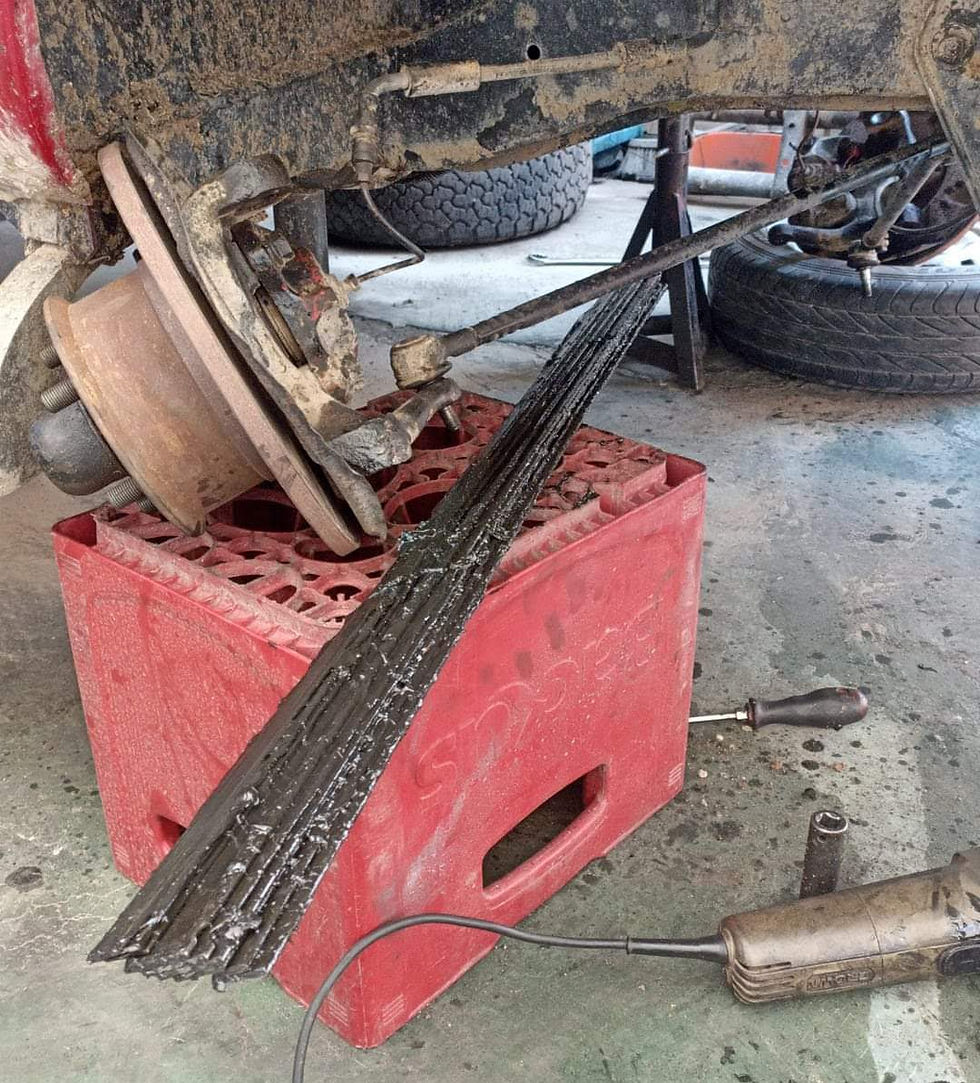
In typical Latin American time, nothing happened until the next day. The replacement bars turned up the following morning, along with another anti-roll bar—but unfortunately it wasn’t the right one. They looked at it for a while as I explained that ours had different ends that bolted to the beam. I also noticed his had been cut and welded, which, considering the price he was asking, wasn’t great. He did have another, correct type, but wasn’t willing to part with it, so it looked like we’d be leaving without one again.
With another set of bars to try, Omar began to refit them. After several attempts and not much luck, I pulled out my new set of overalls (tiny Bolivian man size) and did it myself. He then spent the rest of the day telling everyone who came into the garage that I was a mechanic and had helped him. Fine by me—hopefully it would make things cheaper. Once we had refitted the bars, we set about adjusting them. While we had fitted and welded beam adjusters in Peru, we hadn’t been able to actually adjust the front leaves as Ruby had been on a ramp. Now, with the weight on the floor, a jack, three people and a 6ft bar, we were able to move them up.

It was great to have some more clearance at the front, but when we put her back down on all four wheels, the sag was still there. We refilled the air shocks, which now had new bushings, and it levelled slightly. While it wasn’t perfect, at least the new ride height would hopefully stop the tyre from constantly hitting the wheel arch. We could take our other bars with us as spares.
By this point it was a bit late to be leaving. Omar was more than happy for us to spend the night in the workshop, which was an easy solution. He had also found us new bearings for our second alternator, meaning we could hopefully soon be running two. I spent the rest of the afternoon swapping bearings and refitting it, the process made infinitely easier by access to a proper workshop and good tools.
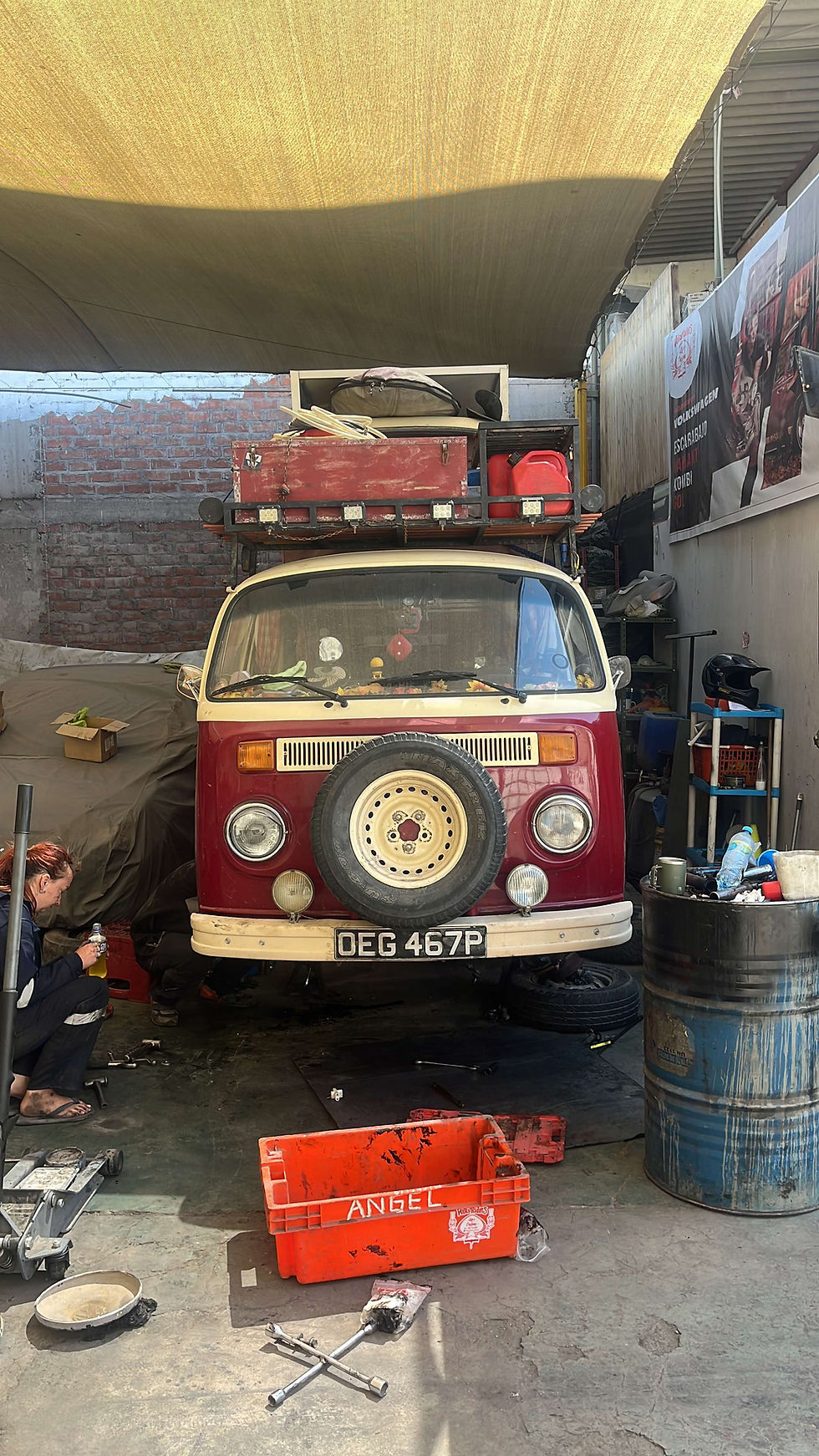
In the morning, we decided that although things weren’t perfect, it was time to head off. The apprentice went under Ruby to tighten the bolts one last time, and then we drove around to another garage with a machine to grease the beam. This was also a good opportunity to get proper CV grease, as we had managed to buy more boots. The parts shop had reluctantly sold me six after some persuading—a full set for us and two for a friend in Bolivia who couldn’t find the right ones there.
Now we were all set to go, we paid Omar and set off. We were about £300 poorer, which seemed like a lot. It did include a new set of suspension bars, and a discount for me doing some of the work. Things in Peru were not cheap, especially considering we hadn’t fully fixed the problem. With only two weeks left before we needed to be out of the country again, it was time to get moving.
We said goodbye to Omar and headed back to where we had stayed with my parents on the other side of town. We had scouted out a nice spot in the valley when we had walked down previously, and decided it would be a good place to camp as we started driving back to Puno. We had also left the cat food mat in the sink at the villa, so this was a good chance to grab it.
When my parents had come, they had brought us a new dash cam that had been sent as a paid promotion for review. The deadline was now looming, so we decided to head to the valley spot to record the video, as it would look far better than the garage.
The spot we chose was a small flat grassy area right next to the road. As a dirt track that went nowhere, there was barely a passing car—more people herding sheep than traffic. The night was blissfully quiet, and we spent the next day recording and editing the video, finishing the evening with a campfire.
The next morning we packed up, ready to start putting distance between us and Arequipa. Instead of taking the main road on the other side of the city, we chose the more minor eastern route. We had previously driven up this way to visit the salt flats, and the road continued across the altiplano towards the same lagoon where we had camped when we first re-entered the country.
It was a steep, long climb back to the Salinas once again, but this time we had a new fuel filter and didn’t need to stop halfway up for a fuel leak. We steadily climbed out of the smog of the city and into the colder, clear plains of high altitude.

There are a few ways to access the giant salt lake up here; the side we visited previously is on a different road, so we continued along the other route until we reached the edge of the desolate landscape, with only vicuñas and wind for company.
After a quiet, cold night, we set off the next day past the empty town of Salinas Huito and the surrounding mining activity. Here the road became an aggressive washboard as trucks passed to and from the salt flats. As we left that behind, it smoothed out into a fast gravel road winding through the mountains. With the easy driving, it was possible to enjoy the barren landscape under a crisp blue sky.

We planned to spend most of the day driving to reach Laguna Saracocha. Partway along, we swapped drivers at a spot marked by a family of vizcachas. We pulled over and sat on a rock above the valley as the chinchilla-like animals darted around below us.
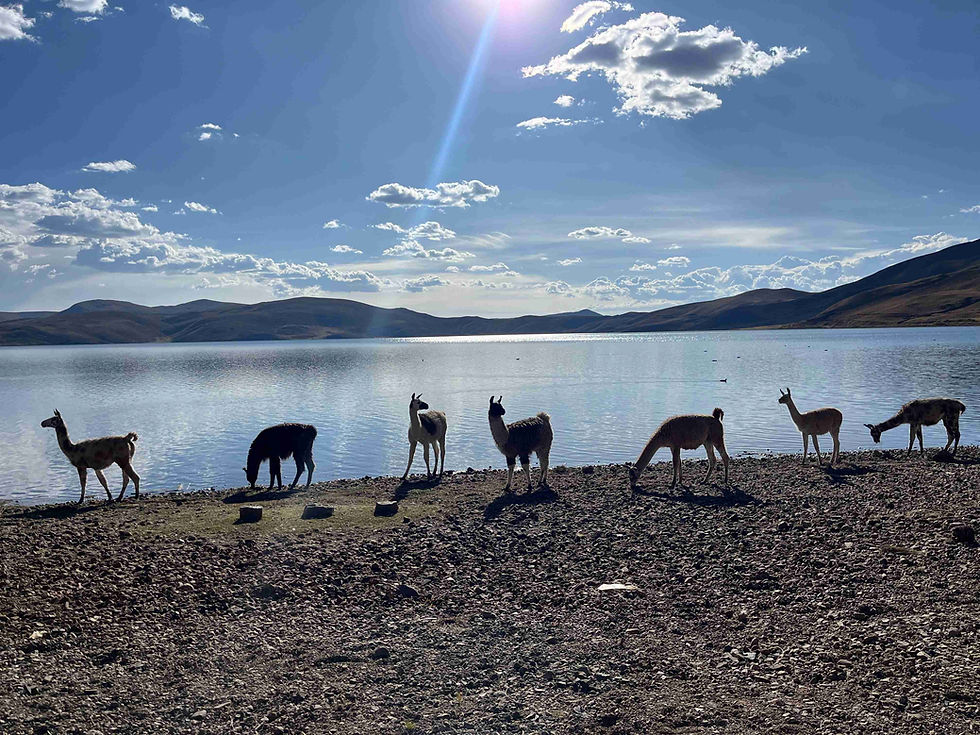
Even though it was a gravel road, parts were smoother than the main highway. It looked recently graded, and we cruised along easily, reaching the lagoon in daylight—giving us time to watch the sunset and a local herding llamas along the shoreline.


Comments