
Colca Canyon
As we had now been here nearly two days, it was high time to enter the canyon itself. This popular tourist destination fills daily with a string of white tourist Sprinters and larger coaches that take people down to the famous Mirador del Cóndor. For us, we piled into Ruby and slowly made our way to the same point.
We stopped to pay our entrance fee (by which I mean the bank of mum and dad), before continuing on. We were certainly being spoilt with them here.
The mirador was another half an hour’s drive and we aimed to arrive at peak condor-viewing time, between 8 and 10am.
As we pulled into the car park, we immediately saw one of these giant birds swooping below us in the canyon. We parked and headed to one of the many viewpoints along the edge. At first it was quiet, and the condors we saw wheeled far below us. My parents walked up to another viewpoint while we moved down to a different one.
Then another wave came.
They flew directly over our heads, just metres away. It’s impossible to convey the scale in photos — a bright sky, a dark silhouette, and no real sense of how enormous they are. The Andean condor has a wingspan of around 10 feet and can weigh up to 15kg. There is nothing small about them.
We were later told by Freddy that the local authorities sometimes drop cow carcasses into the canyon by helicopter to feed them. As vultures, they mainly eat carrion.
After our successful bird-spotting mission, we continued to another viewpoint further down. We had planned a walk, but the canyon made it clear: you either commit to a full-day trek or you don’t. We settled for the view instead.
The previous evening, my parents and I had gone into Chivay to find groceries, with limited success. So we tried again in the smaller town of Cabanaconde. After working our way around the shops, we finally found the elusive essentials: lettuce, tissues, and cheese. With that sorted, we headed back out and stopped roadside for lunch with a view.
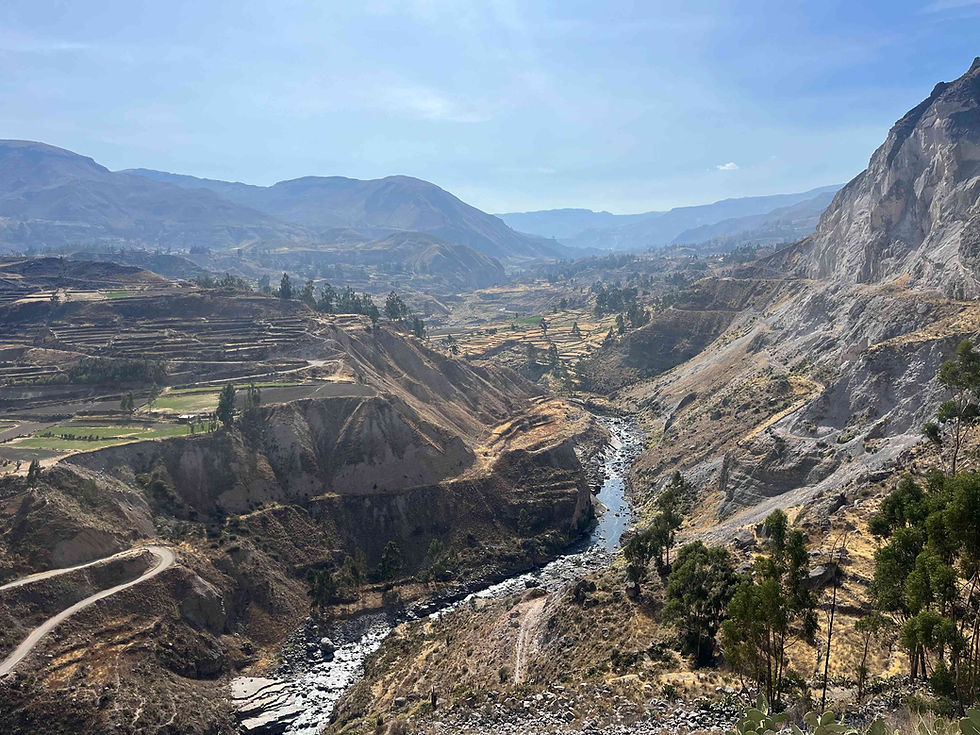
Back at the house we met Freddy, who had been brilliant at helping us with water and general logistics. We wanted to visit the geyser for our final day in the canyon, but weren’t keen on taking Ruby. If it were just the two of us, we’d have gone anyway, but with four people and limited time, we asked Freddy if he could help arrange transport.
He did, quickly sorting a car and, naturally, inviting himself along.
We set off at 10am sharp. The track leading into the canyon was reportedly “bad”, though in reality it was just a firm gravel road. Ruby would have managed it fine, but this way Freddy could join us, so it worked out well.
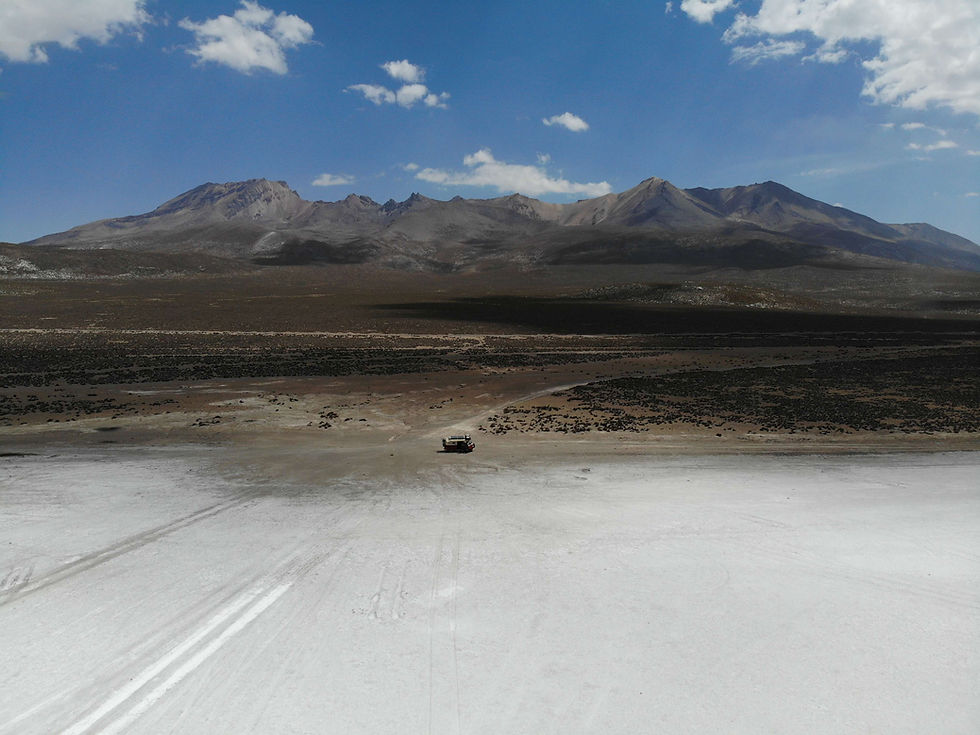
The road climbed through increasingly barren landscape until we reached the end. A couple of other cars were there, but it felt almost empty.
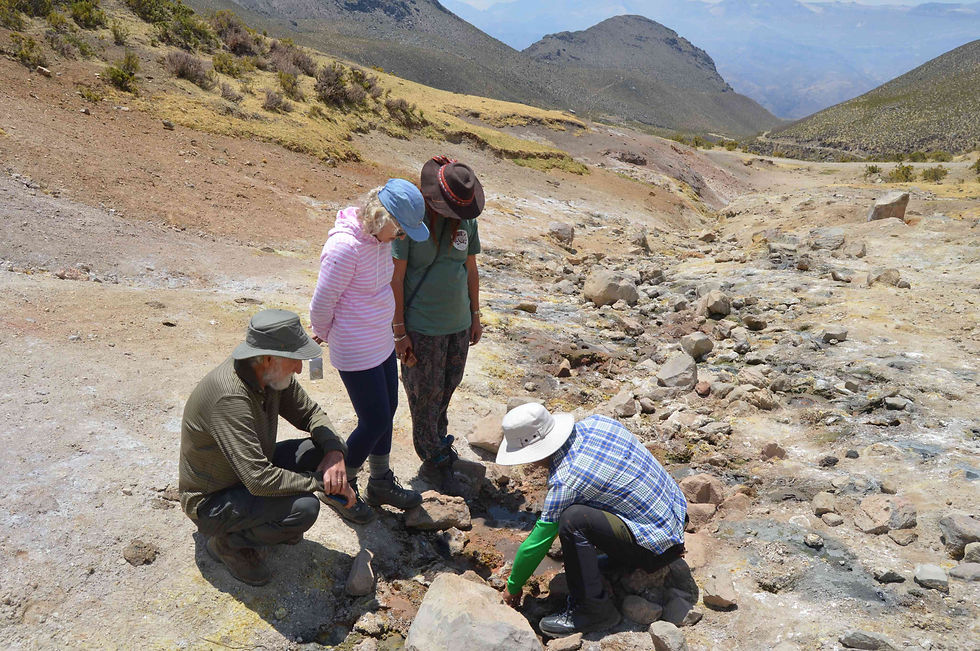
Freddy had told us to bring eggs in a plastic bag so we could cook them in the boiling water emerging from the ground. We descended a small trail to the geyser, where steaming water forced itself from the earth into a narrow valley. On one side, bubbling pools sat scattered across the ground.
We placed our eggs into the water and waited twenty minutes.
Then we took photos for our impromptu “Kombi Chronicles” merch shoot, with the geyser erupting behind us. Only then did we fully appreciate how loud it was — the pressure of the steam almost constant, almost physical.
We retrieved the eggs and climbed back up the hill to peel them. This proved… less elegant than planned. Shells stuck, chunks came away, but they were undeniably cooked. Slight sulphur aside, they were perfectly edible. Geyser eggs — a first.

Freddy had arranged for the taxi to meet us further down the road, giving us time to explore the surrounding area. On the other side of the valley was a field of boiling mud pools and hot mineral vents. You had to pick your way carefully to avoid melting your shoes.
On the way back, Freddy pointed out chachacoma, a high-altitude plant used for stomach ailments and often infused in alcohol. He picked some for us to try in gin later.
We returned to the house, collected cash from town, and briefly liberated the cats from their “sofa protection prison”. Later, the taxi returned to take us to dinner.
We chose Colca Lodge, which had a surprisingly good restaurant despite its polished resort feel. The setting was beautiful, the food genuinely excellent, and it made for a fitting final dinner together in the canyon.
The next morning we left early for the climb back out. My mum was understandably anxious about whether Ruby would make it, but I was confident — especially in the cooler morning air.
She proved us right.
No stops. No overheating. No drama. Just a steady climb back to the top of the canyon. My mum visibly relaxed as we crested the mirador. From there it was all downhill to Arequipa.
We even had time for lunch at a vegan café before heading to the airport.
Then suddenly it was over.
The traffic, the bags, the check-in desks — and then the goodbye.
Trips like this change things in ways you don’t fully recognise until later. What began as a short journey had evolved into something else entirely. It changed how we thought about work, place, and what “normal life” even meant.
I’ve been a jeweller, a teacher, a mechanic. I’ve enjoyed parts of all of them, but none felt like something I’d want to do forever. Teaching came closest, but the system around it wore thin.
Jewellery was creative, but fragile as a career. Mechanics a practical choice, but not quite it either.
Travelling made everything feel more possible. It showed us ways of living that don’t really exist in the same way at home — not unless you have serious money behind you.
It’s not just about escaping work. It’s about seeing what else there could be.
But the trade-off is distance. Leaving family behind is never easy, and it doesn’t get easier with repetition. There’s no clean solution — just the time you do get together, and the hope it happens again sooner rather than later.
For now, though, it was goodbye.
We watched them disappear into departures, then turned back to Ruby.
She felt too light on the drive away. Aimee, however, had no such concerns — stretched out across the back seats, immediately reclaiming her territory.
It was time to get back to it.


Comments