
Revisiting Sucre
We needed to be back in Sucre for Monday morning, around 550km away. While we knew we wouldn’t make it in one day, we decided to cover a substantial chunk of the drive first. That would take some of the pressure off for the following day. We drove for nearly eight hours, arriving at the small town of Pocoata in the fading light. Pulling out onto the now-dry riverbed, we camped a little way from town. After a mammoth drive, we fell into bed and slept soundly through the night.

Sucre was close now, and if we made good time we might still have time to visit somewhere interesting on the outskirts.
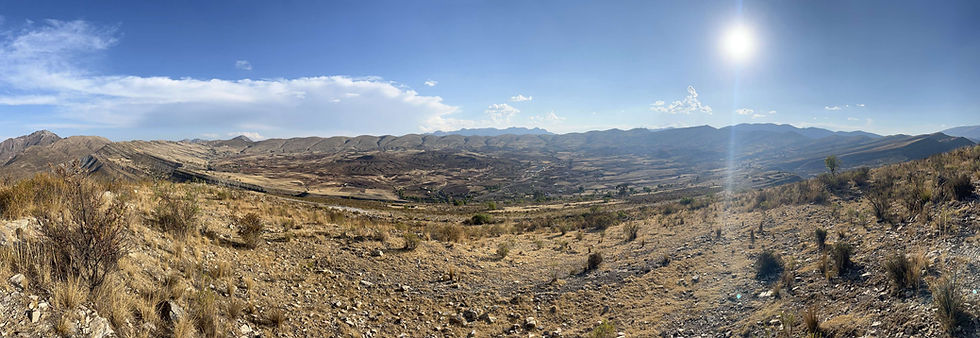
Last time we were here, we had skipped visiting the huge meteor crater north of Sucre. Now, with the chassis welded properly and an afternoon to spare, we decided to make the detour. I was immediately glad we hadn’t attempted it before. A long, rough dirt road climbed steadily into the mountains under the hot afternoon sun before reaching a high pass, where misty blue peaks surrounded us and the hard-packed red earth stretched away empty in every direction.
Then the road dropped off the other side—and if the climb had been steep, the descent was something else entirely. It twisted down the mountainside in an endless series of tight hairpins until we eventually reached the river below and crossed it. On the other side, we climbed slightly again before arriving at a tiny, near-deserted village tucked inside the crater itself.
Despite its sleepy appearance, there was plenty to see. We parked Ruby outside the church and set off on foot through the village towards the river. The geography here was unlike anywhere I’d seen before. Leaving the water to tumble away behind us into the valley below, we followed a rocky ridge jutting out over the crater. It was hot, but only a short walk up to the viewpoint. From there, the full scale of the impact became clear: the village nestled far below, surrounded by rock that had been forced violently upwards by the impact of the meteor, creating the strange outcrop we had just walked along. I had never seen anything quite like it, and I was glad we had squeezed in the visit.

It was a shame we couldn’t stay longer. Not far away were dinosaur footprints we would have loved to see, but time wasn’t on our side. It was already late afternoon, and tomorrow we had to be in Sucre. We climbed back into Ruby and began the slow drive out of the crater and back towards the city.
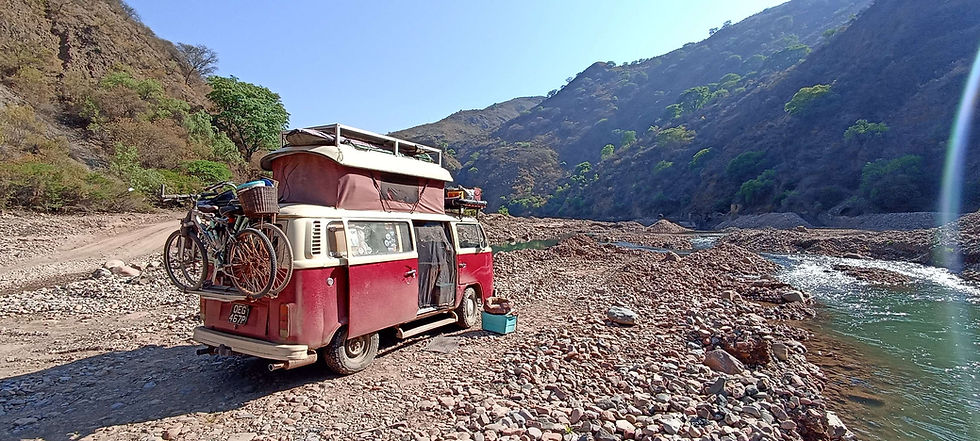
Darkness fell long before we arrived. With Sucre only half an hour away, we decided against heading into the city and instead found somewhere quiet in the mountains to spend the night. Our first attempt turned out not to be a village at all, but some kind of compound full of angry dogs. We quickly retreated and found a dry stretch of riverbed further down. Despite feeling completely secluded, people kept wandering past us throughout the evening from seemingly nowhere, paying little attention to our presence as they ambled down the riverbed in the dark.
The following morning we arrived perfectly on time for Aimee’s 10am vet appointment. After a quick examination, the vet confirmed she was fit for surgery that afternoon at 3pm. He understood our tight schedule and moved quickly, which was a huge relief. We had planned to return to Isabella’s parking spot and settle there for a few recovery days, but when we arrived we found a huge construction site blocking access. Isabella apologised and explained that building materials were regularly blocking the road, meaning we couldn’t stay there.
With that plan gone, we returned to the free spot we had used before. I still had a pile of things my parents had brought from England waiting to be installed, so I spent the afternoon working on our new electrics while Lee took Aimee to surgery. Several hours later he returned with a very groggy, heavily sedated cat.
As far as we knew, the operation had been a success. We would get more details at her check-up the next day when she returned for antibiotic injections. In the meantime, we stayed awake well past midnight as she slowly came round from the anaesthetic and became increasingly furious with the world. Aimee does not do well with sedation, so we kept a close eye on her to make sure she didn’t do anything stupid while she recovered her senses.
Our follow-up appointment wasn’t until 4pm the next day, so we stayed put and ticked off more odd jobs around the van. We had hoped to leave that evening, but the vet wanted to see her once more the following morning. She still had a drain in her leg, which he planned to remove then. He explained that the plate in her leg had almost completely fused into the bone and that he had broken several drill bits trying to remove it—but he had managed it. That was excellent news, and we hoped it would finally make a real difference.
Since we were stuck another day, we decided to sort the cats’ health certificates while we were there. The staff were incredibly helpful, making sure we had all the right paperwork. We also finally got Lexi chipped—something we had been meaning to do for ages. They noticed one of her vaccines was technically out of date, so they gave her a fresh one, updated the certificate, and even backdated the paperwork to keep everything in order. With that sorted, the only thing left was a final government office visit in Potosí. It was a big weight off our minds when every day was now laid out and planned to reach Chile in time.
The following morning we took Aimee back one final time. The vet said everything was healing well and showed us how to remove her stitches ourselves in ten days. He had been incredibly accommodating, and we were grateful we had managed to squeeze the surgery in before leaving.
Now, at last, it was time to head somewhere new: the mining town of Potosí.


Comments