
Beneath Potosi
Normally, we would probably have stopped somewhere en route for the night, but there was no time for that. We had just 11 days left on our visa and one of the most challenging roads of the trip still ahead of us. We were trying hard to coordinate our timings so we could drive that route with our friends, so we pushed straight on to Potosí, a town built around a 16th-century silver mine that we were keen to visit. With time being short, we had already pre-booked a tour for that same afternoon.
The towns aren’t far apart—around a three-hour drive—but before the tour we wanted to sort the pet paperwork. We’d heard the process involved collecting bank details, driving across town to pay, then returning with proof before they’d issue the papers. To save ourselves some back and forth, we turned off down a very steep and questionable road in search of the office. After banging on the door for a while, a lady appeared and told us no one was there and they wouldn’t be back for an hour. We waited outside, twiddling our thumbs, while the guy from the tour kept messaging to check we were still coming. Just as we were about to give up, the doors finally opened—only for the man inside to tell us he wasn’t the right person and we’d need to wait even longer. We were out of time. Typical bloody government.
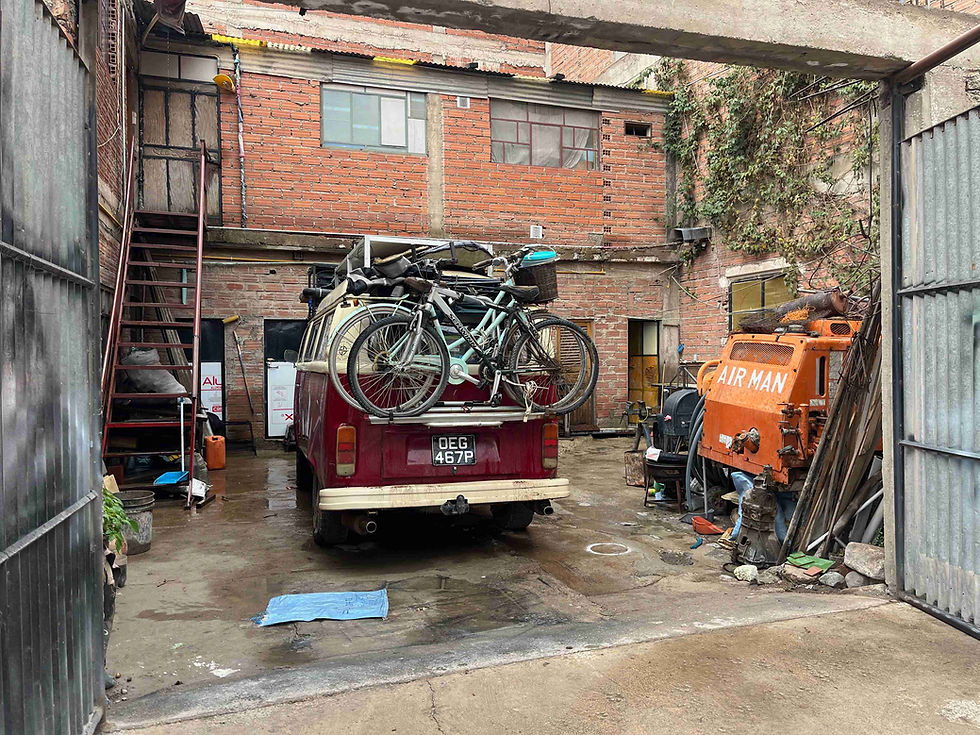
We picked our way back out of town, sticking to the main roads and avoiding any nasty surprise hill climbs, and made it to the tour company with about 15 minutes to spare. They opened the gates and let us park Ruby inside a small courtyard while we waited for our guide, Wilson. He arrived not long after, a trail of dusty-looking Germans behind him, looking like a man getting very little break between tours. As soon as he’d finished with the last group, he was rummaging around for overalls, hard hats, bags and bottles of water for us. First, he explained, we’d head to the miners’ market to buy gifts, then visit the mine itself before finishing at the refinery.
It was just the two of us, so we climbed into the back of his mate’s car and headed to the market. Dressed head-to-toe in baggy blue overalls and hard hats, we wandered between the stalls looking thoroughly ridiculous while Wilson explained what miners liked. You could buy alcohol and cigarettes, but he recommended we avoid giving them things that were bad for them. Instead, he said, they chewed coca leaves constantly for energy during their long days underground. So we bought coca leaves, soft drinks and, naturally, a stick of dynamite before piling back into the car.

In a regular old estate car with most of the interior trim falling off, we clattered out of town and up the steep, rough track that led to the mine. A few small shacks stood outside the entrance, which Wilson explained were for the women—traditionally, they were not allowed underground. At the doorway he pointed out a dark stain on the wall, apparently llama blood sacrificed for luck in the mine. On that bombshell, we headed in.

The tunnels were narrow and cramped—especially for larger people—and we wound our way deeper and deeper underground. Wilson explained that miners owned different seams: some struck lucky and found rich, wide veins, while others worked narrow seams that barely made money at all. Either way, they worked brutally hard—around 14 hours a day—with absolutely no health and safety to speak of. We climbed over giant holes in the floor, ducked beneath precarious wooden supports, and squeezed past side tunnels disappearing into darkness. At one rock face, Wilson told us to leave a bag of coca leaves and a drink for the miner working there. He was a miner himself and seemed to know everyone—and exactly where they’d be—in the maze of tunnels.
The mine used to be famous for silver, but these days they mainly extract zinc, tin and lead, much of it won through brute force, head torches, pickaxes and dynamite. We went looking for another miner and his brother to see if they wanted to use our stick, but they were busy filling wheelbarrows with rock and told us maybe later.
While we waited, Wilson took us to sit on makeshift benches carved into the wall in front of a mud statue. Here, he explained, while people might follow other religions outside the mine, underground they believed in the old gods — Pachamama and El Tío, the god of the underworld and protector of the mine, capable of both protection and destruction. To keep him onside, miners leave offerings at his feet: cigarettes, bottles of alcohol and coca leaves.
We sat before El Tío’s statue and tried the miners’ drink, a small plastic bottle containing 95% alcohol. To demonstrate its strength, Wilson dipped his finger into the liquid, set it alight, and used the tiny flame to light himself a cigarette.
Not long after, the brothers were ready. We followed them deeper into their section of the mine, where one climbed high up a narrow seam using bits of wood wedged into the walls as footholds. Perched far above us, he lit the fuse, and we all retreated to what was considered a safe distance. I hoped we wouldn’t miss the explosion, but that wasn’t something I needed to worry about—even from where we stood, it shook the mine to its core. I couldn’t help thinking the other travellers we’d met were probably right: one day, surely the whole mountain will collapse.

With most of our gifts now given away, we left the mine and headed to the refinery, which was a much more relaxed affair. We were handed a lump of zinc to admire as we walked in, while several of the workers seemed content standing around drinking beer. In the machinery room, giant drums crushed rock into smaller pieces while mechanical arms stirred thick slurries in the final stages of separating valuable minerals from worthless stone. Outside sat a huge pile of brown sludge that looked worthless to me, but was apparently the refined mineral ready for further processing. By the end of the tour, we somehow found ourselves standing in the yard sharing a cold beer with refinery workers before being whisked back down into the city and reunited with Ruby.
Wilson then asked if we fancied going out for a drink later. As he lived above the courtyard where we were parked, it seemed rude not to. After a shower, we met him and walked all of a few metres to a tiny local bar where you had to knock to be let in. We ordered drinks, including a hot local alcoholic drink whose name I still can’t remember—it came in a giant flask and tasted vaguely like alcoholic lemonade, which was better than it sounds.
After a while, Wilson asked if we’d mind sitting with another man in the bar, explaining that he’d recently lost his wife and wanted company. Several drinks later, we decided pizza was required and—with some help—managed to order one in. I’m still not entirely convinced this man had actually lost his wife. He didn’t look remotely sad enough. There remains a strong possibility it was simply a plot to get the gringos to pay for everyone’s drinks. Still, it wasn’t expensive, we’d had a brilliant tour, and in the end we didn’t mind footing the bill.
It was at around this point while in Potosi that we’d also discovered what had caused the loud bang at the Bolivian border. The garage in Peru had failed to tighten the adjuster nut on the front beam, meaning the adjusters had slipped and the whole front suspension had collapsed. I’d also noticed the new shock absorber bushings were already trying to escape—clearly another bad job. With over 400km of dirt road looming ahead, fixing it became the priority. I decided we’d be better off doing it ourselves, but to do that we needed a trolley jack. Wilson said he could get us one and that we could use the courtyard workshop space. That definitely earned him a slice of pizza and a flask of alcohol in my book. Now all we needed was for tomorrow’s repairs to go smoothly—and for the rain to clear.


Comments