
Peru's Northern Coast
There is not much of interest on the northern coast of Peru and so we had planned to head inland to the visit the Gocta waterfall, the second highest in the world. However, after spending two whole weeks in Porta Verde and an entire month of our visa in total, we decided we didn’t have time. Instead, we headed down the coast, planning to get to Huaraz within a few days which offered cooler weather and spectacular hiking. We hadn’t done driving much for a while and so we didn’t mind knocking off a large chunk of the big drive ahead. We arrived in the dark to park on the malecon of Playa Chicama for a peaceful night. It was almost odd to be wild camping again, but it felt good to be back on the road and off to explore somewhere new, especially with proper suspension.

Even after two weeks in Piura, we still had tons of little jobs to do, but we couldn’t afford any more time stationery. So that morning we re-glued starlink back on its base and headed south towards the large town of Trujillo to try and find ourselves an ethernet adapter and stock up on groceries. We stopped at the huge shopping centre in the town, something Peru has an abundance of. We decided to grab some lunch there and ended up having fried sushi which may not sound good, but was actually amazing. We did a big shop in Tottus and while I headed back to the van to put that away while Lee went in search of an ATM and an ethernet adapter. Back at the van I noticed two things I didn’t like. Firstly the rear suspension looked very low and secondly it looked like there was fresh oil underneath. I packed away our groceries before having a look. It appear that the tyre had been touching the pipe for the air suspension and rubbed through it completely. Fortunately, we had spare pipe and it was a quick fix. We would just need to find another petrol station to reinflate the shocks on our way out.
The oil leak was more troubling. If i’m being honest with myself here, I noticed a potential leak as we lay under the van trying to take the radiator off in Quito. There was a slight dark patch between the engine and box that didn’t use to be there. Now this had turned into a definite leak. It’s hard to say whether it was coming from the gearbox or the engine as it was leaking out the cover between the two but I assumed the box as the engine had not been touched. This put rather a downer on the day, and I couldn’t bring myself to tell Lee that it looked like we’d be ripping the whole lot out again, far too soon.
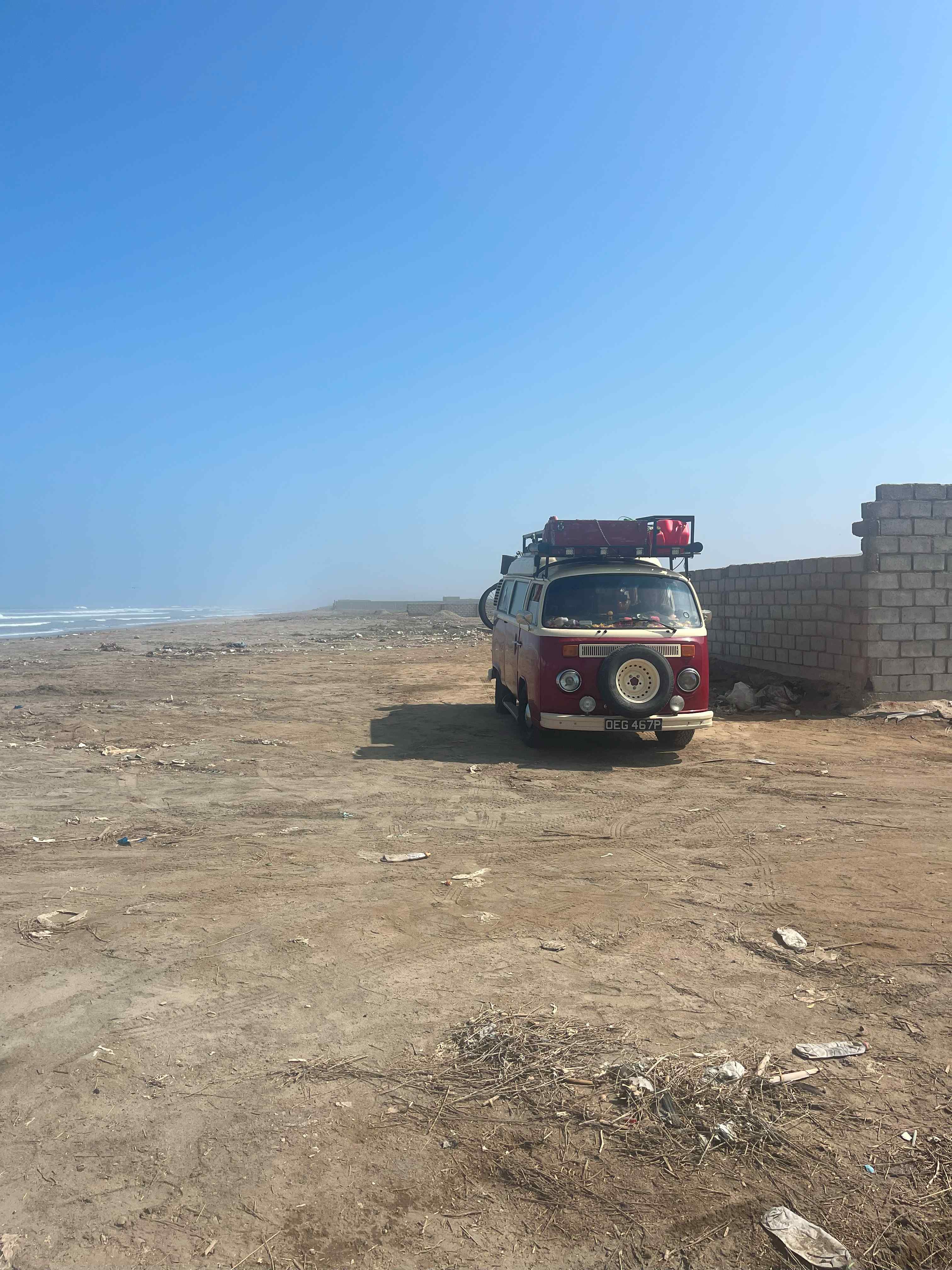
He soon returned with an adapter and we set off to find some more air. As we had spent longer than we would have liked to in the town and so we headed to the closest free spot. This whole coastline is rather odd. You drive down the road, with little to see either side except dunes. As you get to more populated areas, such as the strip before the town, the land at the side of the road has been divded up into plots by brick walls. Most are either painted with the message “Somos Peru” or “Propidad Privada”, however there is nothing else. On the occasional plot stands a lone, nice building. I get the impression that someone saw an advert for “Pacific Coast Beach Front Ownership Opportunity!!!” and blindly bought it, not realising they were actually purchasing something that looked like it had come right out of the wastelands of Mad Max. Nevertheless, they’d committed and so built they nice home overlooking the surrounding piles of rubble and waste.


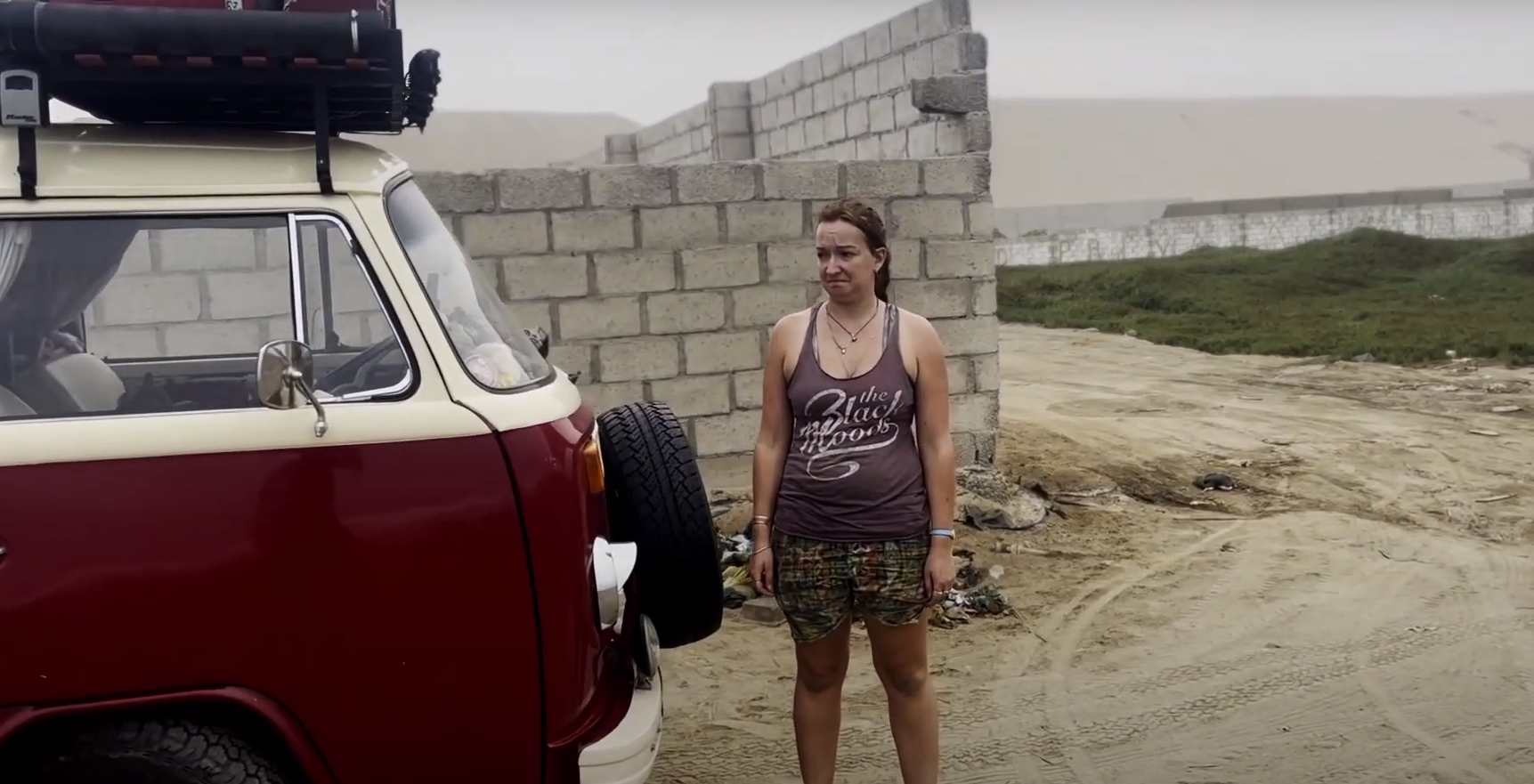
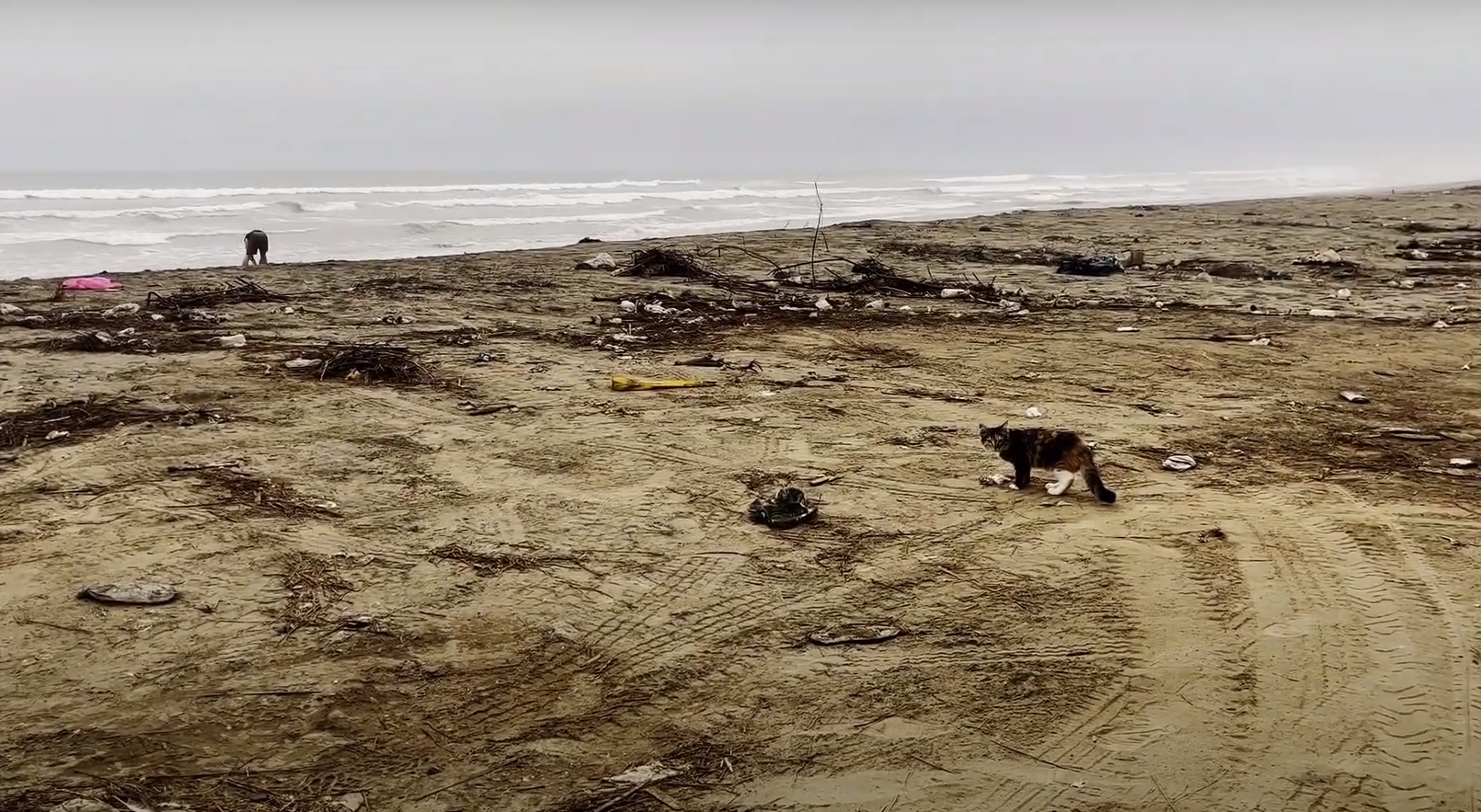
On the whole though, these lots seemed mostly abandoned. They had their walls, but no buildings. The land inside as much of a wasteland as the street on the outside. We drove down the side road between some of these plots and parked up on the beach behind the outer wall. It was pretty horrible really. The first thing that hit me was the smell of rotting flesh. It seems there is some kind of bird flu going around and the beach was littered with the corpses of birds in various states of decay. Still, there wasn’t too many other options and it was getting late. As if the rotting birds weren’t bad enough, the beach was also covered in rubbish too. So while I set up the van, Lee grabbed the shovel and set about burying all the dead birds around us. Not only for the smell, but also in case the cats showed any interest. This did make quite a difference, and after he had spent the entire evening burning the rubbish around us, it was almost ok. It was only going to be for the night and while it may not have been the nicest outside, it was very quiet during the night and we slept well.
The following day we set off again, we had planned a pretty precise schedule for our remaining time in the country which should have been two months, but actually was only one. Back on the campsite in Piura, my parents and I had spoken about the fact that they would like to visit us in September. On our current timeframe, that would put us in Bolivia, something they didn’t care too much for and so we had come up with an alternative plan. We would leave Peru early, visit Bolivia and return to Peru with our remaining visa in September. In order to give ourselves sufficient time for this, we needed to leave at the beginning of July, giving us just four weeks to explore the majority of the country. In order to give ourselves a few days acclimatising to the altitude in Huaraz and enjoying some hiking, we kept moving.
There are different ways to reach this mountain town and we had planned to do a loop around the Huascaran National Park, bringing us back around to the popular hiking spots after the weekend had passed. The route would take us up into the mountains via Canon del Pato, which looked like an amazing road to drive. My main concern was the altitude, having spent some time again at sea level, the road climbed quickly into the mountains to well over 4000m, it was something to take a little time over.
I had broken the bad news to Lee about the oil leak and we made sure that we had both spare engine and gear oil before we headed up into the mountains. The canon is beautiful, and barren. We needed to make sure we had everything we needed with us for a few days. After a few hours of driving, with the last of the afternoon light we reached the final village of Chuiquicara.


Here the police stopped us as we were about the leave the village. They kicked the tyres and checked the lights at first not seeming so friendly. After we had chatted for a few minutes in Spanish about our trip and given them a sticker they warmed up. They said if we needed any help then they were there for us and to be careful in the canyon as the road was bad. Now with the light starting to fail, we headed on in.
On the whole, the road was fine so far, but the final section before the spot we had decided to camp at had been subjected to a huge landslide and was narrow and rough. We waited for a lorry to pass before bumping Ruby along in the now dark. It was definitely not something I would choose to drive in the dark and it was lucky that it was only a few minutes before we reached a smaller road down to a huge level gravel area right by the river. In the darkness, we stopped on a fairly level patch, the river roaring below us and the road of the canon just above. I didn’t imagine there would be much traffic down here at night and even if there was the noise of the water would drown it out.


The last thing we did was to try and get the internet. We weren’t sure if it would work here in a canyon, and it didn’t seem to be finding any signal in its current position. To my surprise though after moving it around and pointing it in different directions it came online. It had definitely been a good idea not to permanently mount it to the roof as now we were in the middle of nowhere, and yet online. The more we used it, the more I liked it. It seemed that it opened up more options to us for free camping too, something which I love. The only challenge now was to get it run on 12v, but that was a project for another day.
After sitting outside for a while to enjoy the incredible starry sky, we headed to bed. Tomorrow would bring some incredible driving.

Comments